
Pull up a chair.
This one is hard. I am going to tell it anyway, because the alternative is letting it sit in me unsaid, and I have already found out this week what that costs.
His name was James. I called him Jim. Mostly I called him Jimmy.
We grew up together in Thousand Oaks and we were, for all the years that matter most, inseparable. Not friends the way grown men say friends, meaning we catch a game twice a year. Inseparable. All the way through high school and past it.
More Family Than My Family
I need you to understand what that house was to me.
When I was seventeen I spent a week in the hospital. His family did not miss a day. Not one. Somebody from that house was there every single day I was in that bed, and I have never forgotten it, and I have never entirely gotten over it either.
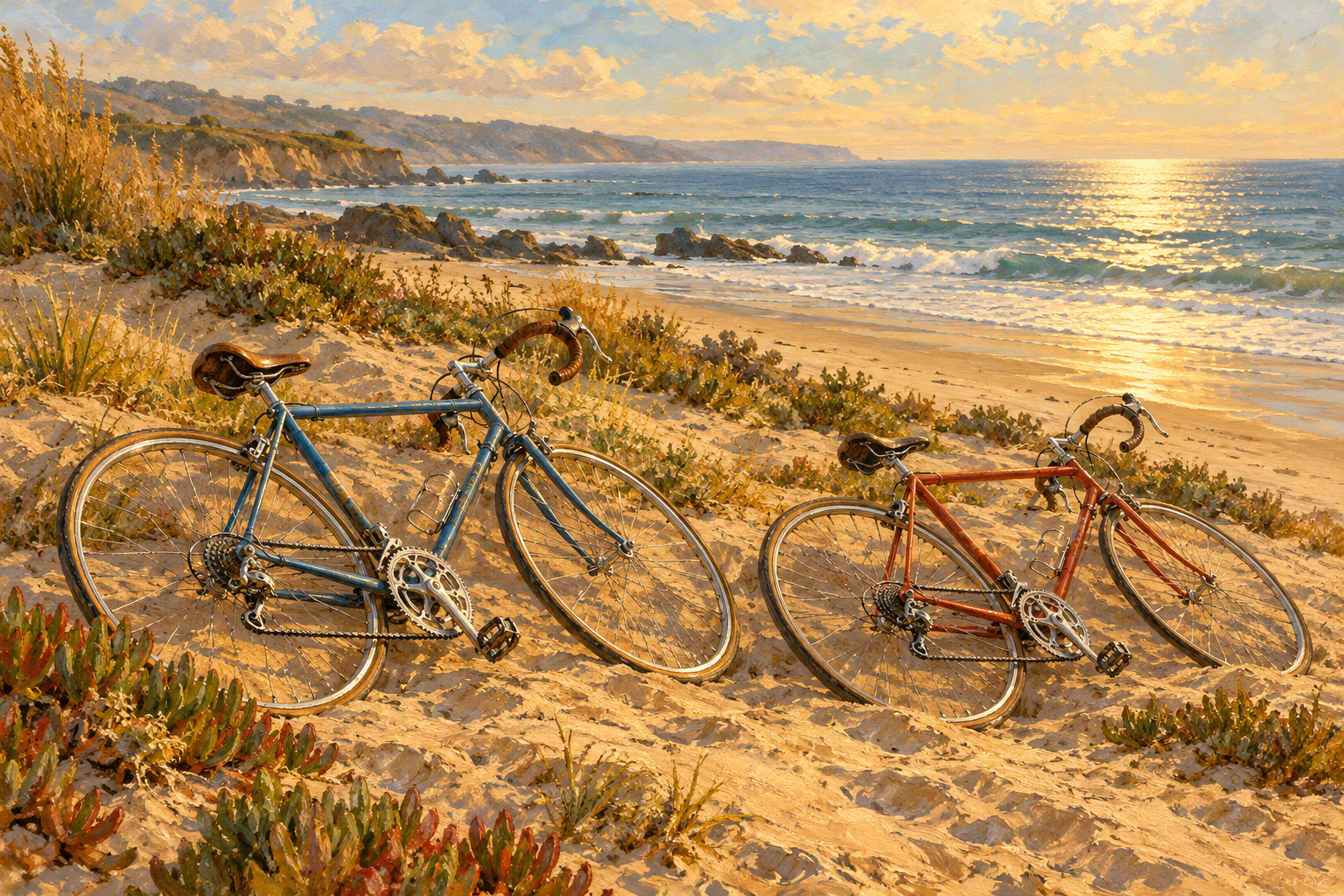
I ate my meals over there. We hiked. We rode horses. We played tennis and basketball, badly and constantly. We got on bicycles in Thousand Oaks and rode all the way to the beach, which anyone who knows that stretch will tell you is a young man’s idea, and we were young men. Dinner at their table. Pizza more times than I could count.
He was my pizza buddy. If you read what I wrote about Aunt Fabiana, he is the friend in that booth — the one sitting across from me the night I noticed a sign on the wall that said they needed a prep cook. My whole working life with food started on an ordinary evening with Jimmy, doing nothing, going nowhere.
That is the thing about the people who are actually with you. They are present at the hinges and nobody notices at the time, because you are eighteen and it is just Tuesday.
His father became my father too. I have caught myself for fifty years saying our dad, and I never once corrected it, because it was true.
Jimmy was my brother from another mother. People say that lightly. I do not.
The Jaguar
Here is the one I want you to have, because it is the happiest thing I own.
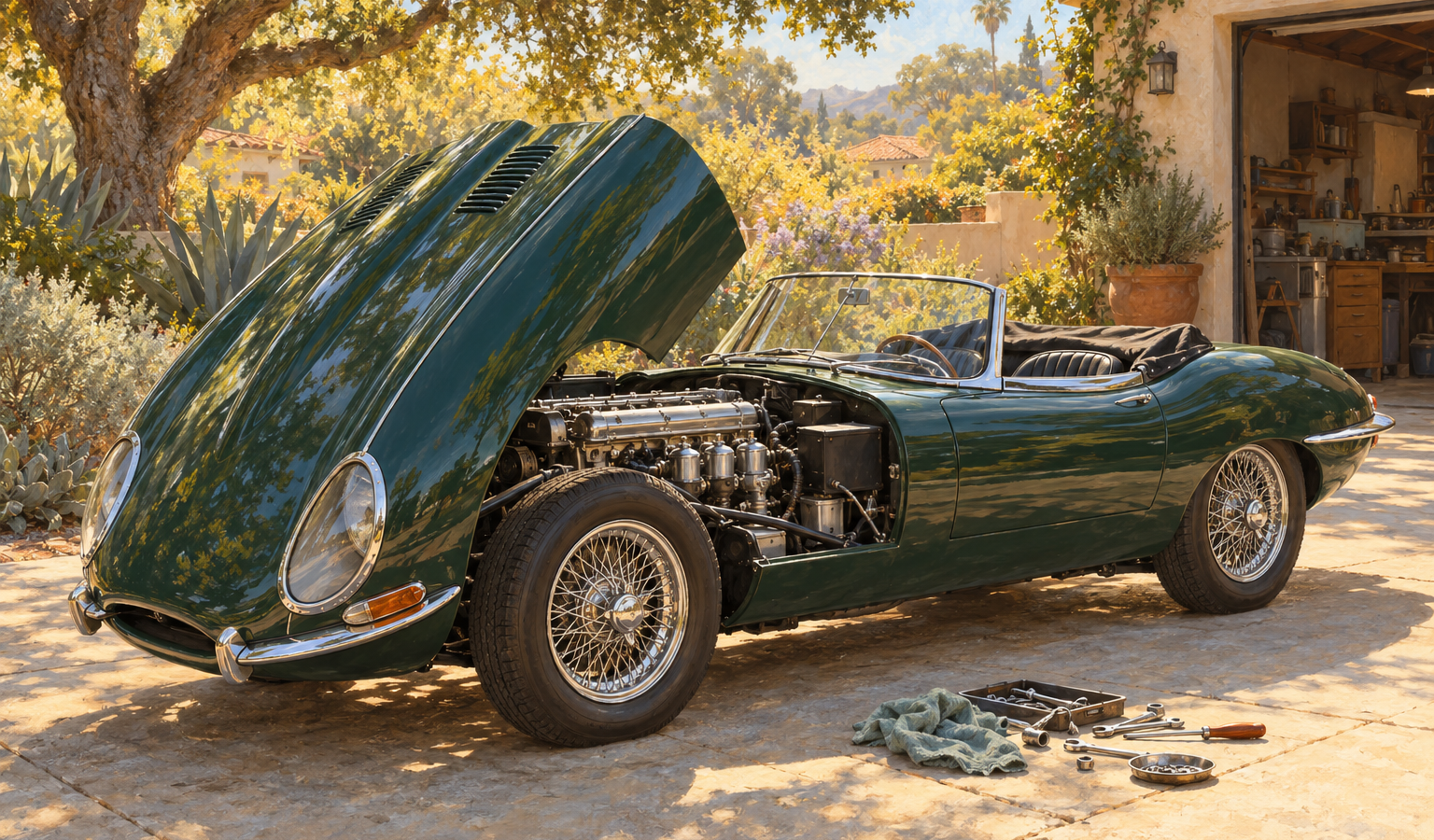
I had joined the Navy by then, and I was home on leave. I came walking up to the house and there was Jimmy, up to his elbows in a 1962 Jaguar XKE convertible.
If you do not know the car, go look it up. Enzo Ferrari is supposed to have called it the most beautiful car ever made, and he was not wrong. Long hood, wire wheels, a shape that looks like it is moving while it is parked. And there it sat, dead as a stone in the driveway.
He had been at it for two days. He had changed out the distributor and it would not fire, and he had reached the point every man reaches with a machine, where you are no longer repairing it, you are negotiating with it.
So I started poking around, because that is what you do when it is your friend’s car and your leave and a good afternoon.
And I saw it. A short. Right there.
I asked him if he had any spare parts. He had a box — there is always a box. I looked in the box. I looked at him. I smiled, and I pulled out a small circular plastic insulator, about the size of a shirt button, and I put it where it went.
The XKE started right up.
Two days of his life, and the whole problem was a little piece of plastic worth about a nickel.
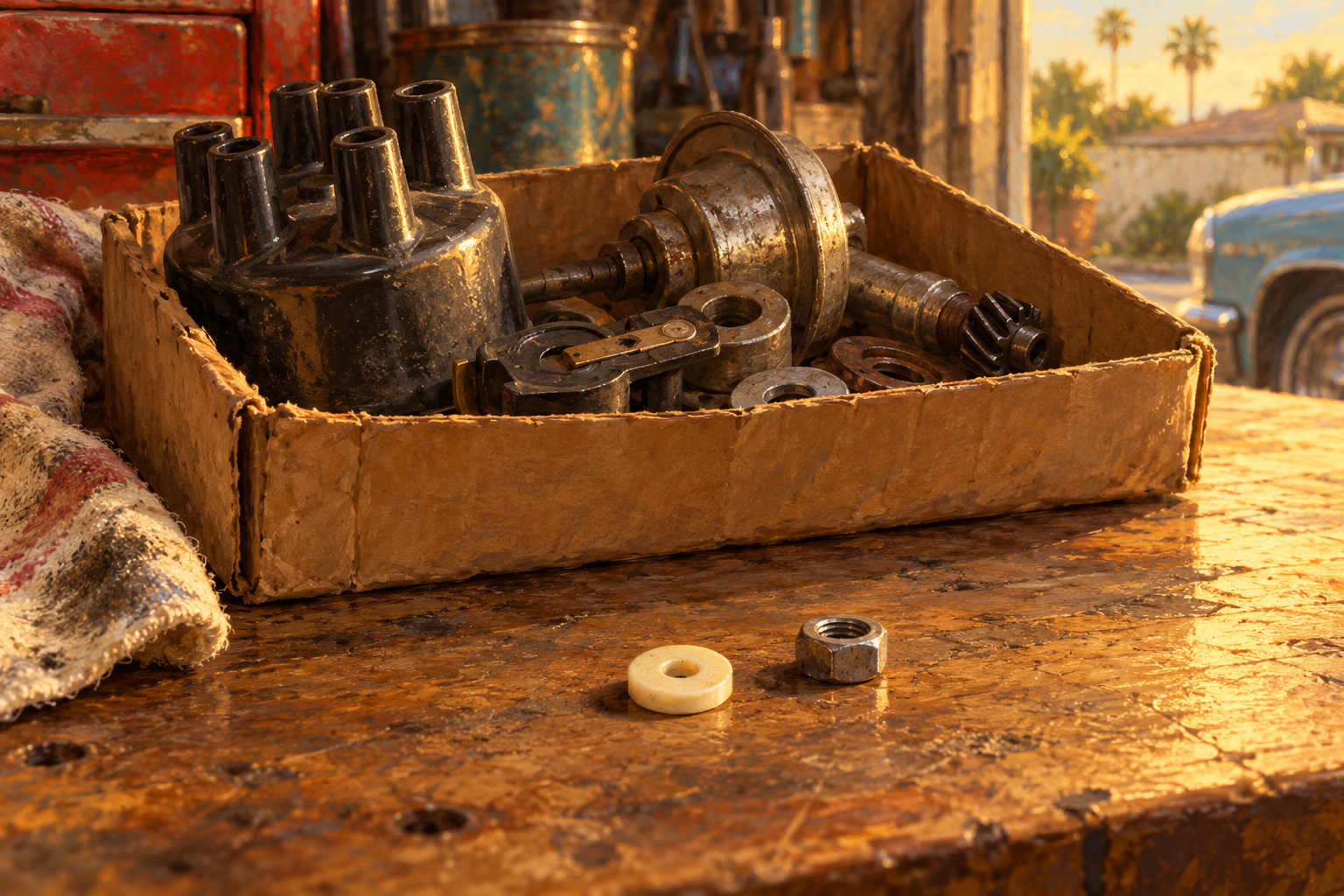
I have thought about that afternoon more than almost any other, and I used to think it was about the car. It is not. It is about a man who has been fighting something alone for two days, and the friend who walks up the driveway at the right moment and finds the small missing thing.
That was us. That was what we were to each other.
Maribelle
His mother’s name was Maribelle.
I knew she was ill. I did not know how ill, because I was young and nobody had sat me down, and because some things you do not learn until you walk into a room.
I came in on that same leave and she was on the couch with the television going. I sat down in a chair across from her and said hello.
She did not move.
I looked her in the eyes and she was looking straight back at me. All the way in there, looking at me. She could not move. She could not speak. She could move her eyes.
Jimmy’s father came in and told me plainly: late-stage Huntington’s disease. She would not get better. There was no better to get to.
I sat with her for a few hours. I had two days of leave. That was my free time, all of it, and I have never once wished I had spent it differently.
When his father came back and said it was time for her bath, I stood up. I looked at her and she looked at me. I smiled at her. I told her I loved her.
And a single tear formed in her eye.
She could not move and she could not speak and she found a way to answer me anyway. I did not know what to do with that. I still do not, forty-odd years on. But I knew what it was. I knew it was the last time, and so did she, and we both sat there knowing it together for a second.
I left that room with my head hanging low. I stayed the night at the house.
I never saw Maribelle again.
What He Was Carrying
Some years later I was back visiting, and Jimmy told me he was afraid he had it.
For those who have not had to learn this: Huntington’s runs in families, and a child of a parent who has it carries a one-in-two chance. A coin flip, handed to you at birth. It usually comes on in midlife, which means a man in his thirties can spend years watching his own hands for an answer. There is a test. Plenty of people never take it, and I have never once blamed them.
He had known for a while. He knew the symptoms — he had watched them take his mother in front of him, so he knew them the way nobody should have to.
And he told me he had thought about taking his own life.
I had no words. I am a man who usually has some, and I had none.
So we did the only thing there was to do. We sat together and we wept, and we drank a few bottles of wine, and I remember what it was because the mind keeps strange receipts: Vouvray.
I left a few days later. I told him he was always in my prayers. That was not a figure of speech and he knew it was not.
Losing Him
I got out of the Navy in 1995 and I tried to call him.
I could not find him.
I called our dad, and we had a long talk, and he told me Jimmy had gone into seclusion. He did not want to hear from anyone. Not from me either.
I want to be careful here, because I have had thirty years to think about it and I have landed somewhere different than where I started. A man facing what he was facing has the right to decide how he is going to face it. It was not a rejection. He was not punishing me. He was protecting everyone he loved from a front-row seat to something he had already watched once.
Our dad and I spoke a few more times. He met my new family. And then the years did what years do.
I thought about Jimmy constantly. I searched for him online as the internet grew into the thing it became. Nothing. For years, nothing.
Today
Today I was walking around at work and I felt him. That is the only honest way I can say it. Just walking, ordinary day, and there he was in my chest.
I went to my terminal and typed in his name.
And I found him.
My brother from another mother fell asleep in the Lord eight years ago.
Eight years. He has been gone eight years and I have been walking around not knowing, thinking of him, meaning to find him.
And the obituary named it.
Huntington’s.
So the coin came down on the wrong side after all. The thing that took his mother off her feet and out of her own voice, the thing he had been watching his own hands for since he was a young man — he had it. He was right. All those years he spent afraid of something that was actually coming for him, and he was right, and there was never going to be a different answer at the end of it.
I have had to sit with that this week. That he knew. That he was probably sure long before he ever said it out loud to me over those bottles of wine, and that what I took for fear may already have been knowledge.
I sat there with the knot in my stomach and the tears coming from somewhere I do not understand and have no name for, and I thought about his mother on that couch. I thought about the fear he carried for all those years, the one I could not take from him and could not fix with anything in any box.
Here is the mercy in it, and I am going to hold onto it.
He did not take his life.
He went to live with his brother and his family in another state, and he was cared for, and he was loved, and he was not alone at the end of it.
How do I know? Because I was family. I know that house. I know those people. I know exactly what they do when somebody they love needs them, because when I was seventeen years old and in a hospital bed, they did it for me, and they did not miss a day.
What I Did Not Get To Say
I have a lot of regrets. Most men my age do, and most of them I have made my peace with.
This one is fresh and it is not peaceful. I did not say goodbye. I did not get to tell him I loved him.
And I know precisely what that is worth, which is exactly why it hurts the way it does — because I had it once, in that living room, with his mother, in the last conversation either of us would ever have. I know what a final farewell looks like. I have sat in a chair and given one. I know it can be done with nothing but eyes and a single tear.
I just never got the chance with him.
Memory Eternal
So let me do now what I could not do then, and let me do it where it counts.
At my church, when we bury somebody, we do not tell the family that he is in a better place and we do not sand it down into something comfortable. We sing memory eternal. It sounds like sentiment and it is not. It is a prayer — that God would remember him. And when God remembers a man, that man is not past tense. He is not a fading thing in other people’s heads, slowly going out as the people who knew him die off. He is held. He is kept.
Which means this is not too late. Eight years late, and not too late.
Jimmy. It is me. I looked for you for thirty years and I found you on a Tuesday at work, and I have been coming apart about it ever since, which I think you would find slightly funny, and I would let you have it.
Thank you for your family. Thank you for every meal at that table and every mile to the beach and every stupid game of basketball. Thank you for being across from me in that booth on the night that started everything. Thank you for sitting with me in the worst thing you ever had to say out loud, and trusting me with it.
I am sorry I did not find you in time.
You were my dearest friend. I loved you. I love you still.
May your memory be eternal. And Maribelle’s. And may the ones who took care of you at the end be blessed for it, every one of them.
Pull up a chair, friends. Say a name tonight if you have one. And if there is somebody you have been meaning to find — go find them this week. Not next month.
Memory eternal.
— Pop
Leave a Reply